Bottom line on safety
We cannot establish a reliable VisiFlora-specific side-effect rate without controlled safety data for the marketed formula. The seller promotes daily consumption and states its ingredients are selected for quality; that alone cannot establish safety for everyone. Ingredient-level precautions and individual medical context are therefore the responsible starting point. Seller directions.
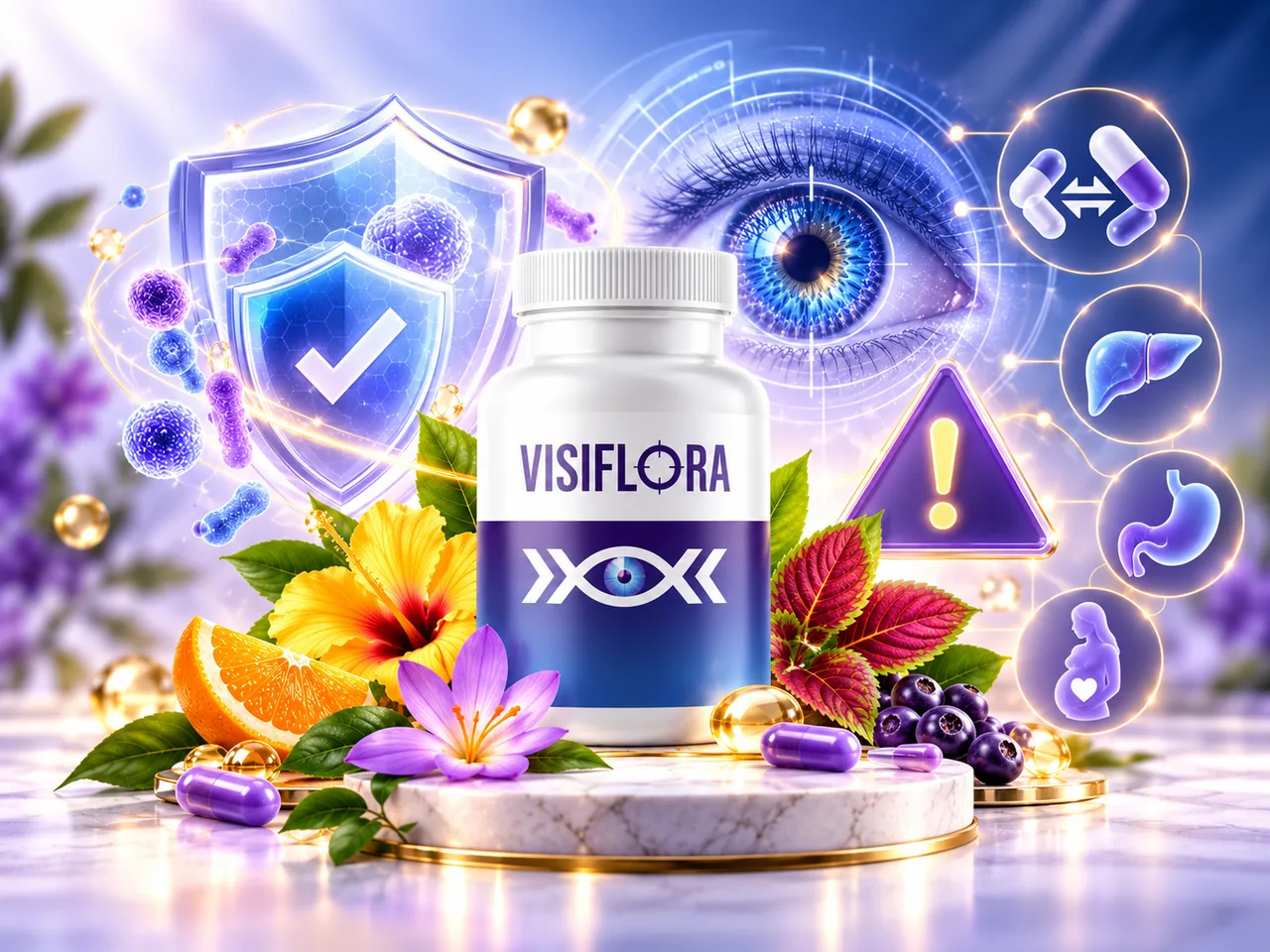 Safety visual
 Product reference
Related visual gallery
These additional visuals are included on this page to make the review easier to follow and more engaging for readers.
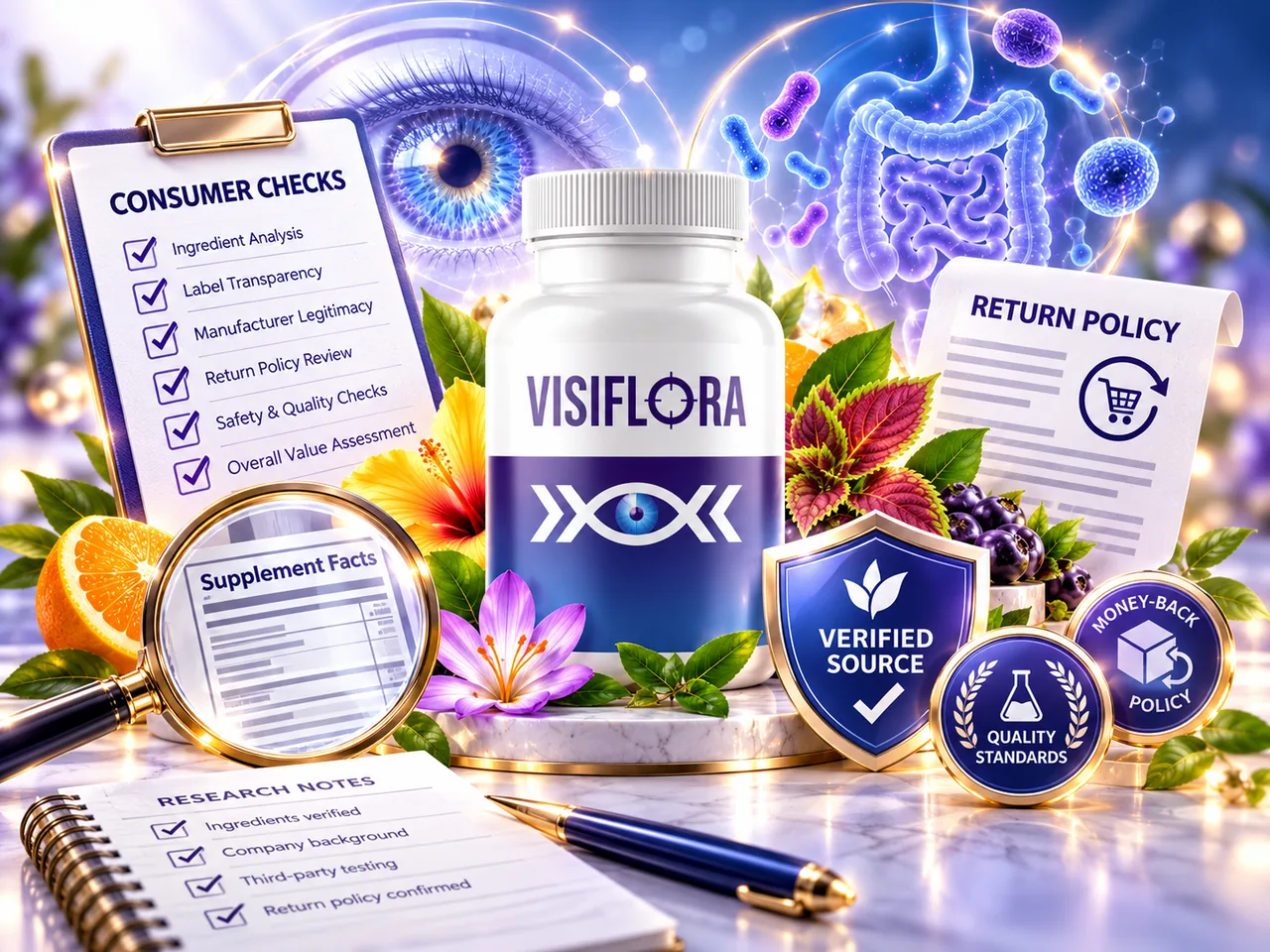
All visuals on this website are original editorial illustrations or reference imagery added to improve readability. They are not medical proof, testimonials or guarantees of results.
Seek urgent eye care for sudden flashes, many new floaters, a dark curtain/shadow, or sudden vision change. Do not wait for a supplement to work. National Eye Institute.
Ingredient-related risks to discuss
Ginkgo and drug interactions
Ginkgo may raise bleeding risk with anticoagulants such as warfarin and may interact with other drugs. NCCIH also identifies dizziness, headache and gastrointestinal symptoms among commonly reported ginkgo side effects in studies of ginkgo products. These are ginkgo-related findings, not measured event rates for VisiFlora. Discuss the complete ingredient list with a healthcare professional if you take medication or have a bleeding disorder. NCCIH ginkgo.
Beta-carotene for current or former smokers
The seller lists vitamin A (beta-carotene). Clinical research with high-dose beta-carotene in current and former smokers showed increased lung-cancer risk in some trials; the NEI's AREDS2 formulation deliberately replaced beta-carotene with lutein and zeaxanthin. Because the dose supplied in VisiFlora is not confirmed from the seller-facing ingredient text, those studies cannot quantify this product's risk, but smoking history makes it especially worthwhile to ask a clinician about the label. NIH ODS vitamin A · NEI AREDS FAQ.
Bilberry and other botanical extracts
NCCIH says bilberry fruit extracts are usually tolerated in research, while cautioning that herbs and medications can interact. VisiFlora also lists coleus forskohlii, saffron, quercetin, grape seed and other constituents. There is not enough authenticated dose information here to make broad personal safety assurances about the combination. NCCIH bilberry.
Who should speak with a clinician first?
- Anyone taking prescription drugs, particularly blood-thinning medicines, or preparing for surgery.
- People with known eye disease (especially AMD, glaucoma or diabetic eye conditions) who might already have a care plan.
- People who smoke or previously smoked, due to beta-carotene research context.
- Those who are pregnant or breastfeeding; avoid assuming safety without clinician advice.
- People who use other vitamin or herbal products and could inadvertently double up on ingredients.
This checklist is not an exhaustive contraindication list. Refer to the actual product label, including any allergy warnings and inactive ingredients, when it is in hand.
Are minor side effects possible?
Individual supplement ingredients may be associated with stomach discomfort, headaches, allergic reactions or drug interactions. However, without finished-product trials, it would be misleading to assign exact percentages or promise that these are the only possible effects. If you suspect a reaction, stop using the product and consult an appropriate healthcare professional.
What should you verify before the first capsule?
Check the ingredient names and doses; confirm the seller's label directions (currently one capsule daily with a meal); review any medication conflicts; identify the full supplier and batch; and speak to your pharmacist or eye professional if uncertain. Never substitute a supplement for prescribed eye treatment. Seller directions.
Safety review verdict
The key limitation is not a proven VisiFlora-specific adverse effect; it is insufficient verified formula-level safety data, alongside known precautions for some listed constituents. Use the evidence review to see the related efficacy limitations and the AREDS2 comparison for important formulation differences.